
Conference
Sponsorship
Previous Conferences
Building Climate-Resilient Seaweed Aquaculture: Innovations for a Warming Ocean
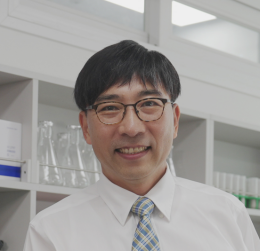
Dr. Jang K. Kim, Incheon National University, South Korea
About the speaker:
Dr. Jang K. Kim is Professor of Marine Science and Director of the BK21 Global Blue Carbon Education Team at Incheon National University, Korea. He received his B.S. and M.S. degrees from Incheon National University and his M.S. and Ph.D. in Marine Botany from the University of Connecticut, USA.
Dr. Kim’s research focuses on seaweed aquaculture, climate change adaptation, blue carbon ecosystems, and sustainable marine resource management. His work spans open-water and land-based seaweed cultivation, integrated multi-trophic aquaculture (IMTA), seaweed-derived biostimulants, selective breeding, and carbon dioxide removal (CDR) through seaweed and coastal vegetated ecosystems. In recent years, he has led several large-scale national and international projects aimed at developing climate-resilient seaweed farming technologies and advancing blue carbon science.
He has published more than 120 peer-reviewed scientific papers and book chapters and serves on the editorial boards of several international journals in phycology and aquaculture. Through extensive collaborations across Asia, Europe, and North America, Dr. Kim has contributed to the advancement of sustainable seaweed aquaculture and the global development of blue carbon initiatives.
Presentation:
Seaweed aquaculture in Korea, heavily reliant on key species like Saccharina, Undaria and Pyropia, is currently facing significant challenges due to the impacts of climate change and rapidly warming oceans. To sustain this vital industry and meet growing global demand, innovative cultivation technologies are urgently needed.
This presentation focuses on Dr. Kim’s recent research to combat these environmental shifts, specifically exploring the use of natural biostimulants to develop high-temperature tolerance and enhance growth in cultivated seaweeds. Additionally, he will share the latest progress in establishing scalable aquaculture protocols for Asparagopsis. While Asparagopsis is already proven to significantly reduce methane emissions when used as a ruminant feed additive, its commercial cultivation technology remains largely underdeveloped. Ultimately, this talk will explore current technologies, ongoing challenges, and future opportunities in both Korean and global seaweed aquaculture as we adapt to a changing climate.
Cookies
We use cookies to enhance your experience of the website. By continuing to visit the site you agree to our use of cookies.
More info
Allow selection
Accept all